


Co dělat, když je ve vířivce vaší vířivky příliš mnoho chloru?
2025-12-05 15:35Poté, co koncentrace chloru klesne na bezpečnou úroveň, obnovte vědecký dávkovací režim, abyste se vyhnuli opětovnému předávkování.
Proč je ve vířivkách Swim Spa snadno nadměrné množství chlóru?Pochopení příčin je klíčem k prevenci recidivy.1. Předávkování
Uživatelé často přidávají najednou nadměrné množství dezinfekčních tablet nebo šokových prostředků, což způsobuje rychlý nárůst koncentrace chloru.
2. Příliš vysoká teplota vody
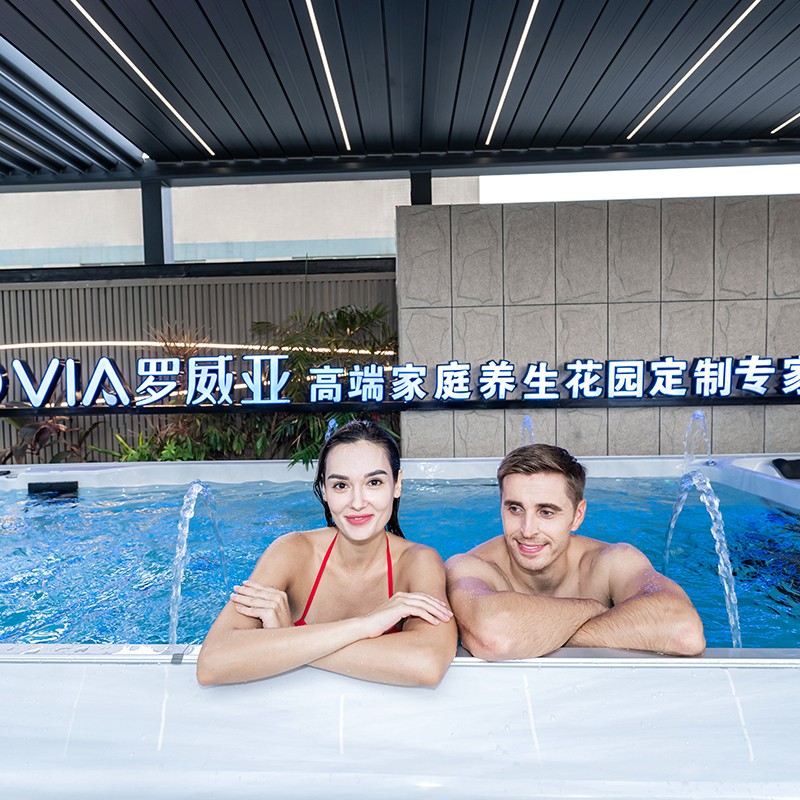
Čím vyšší je teplota, tím rychleji se chlór uvolňuje. Vířivky Swim Spa se obvykle udržují na teplotě 35–38 °C, což urychluje uvolňování chloru a způsobuje drastičtější kolísání koncentrace.
3. Nedostatečný krevní oběh
Pokud je filtr ucpaný nebo cirkulační systém neběží dostatečně dlouho, může se chlór hromadit v lokalizovaných oblastech a vytvářet vysoké koncentrace.
4. Slepé přidávání chemikálií bez testování
Nedostatek testování je hlavní příčinou nerovnováhy chloru.
Pravidelné testování je nezbytné pro udržení zdravé kvality vody v
vířivky s bazénem
.
Jak zabránit nadměrnému množství chlóru ve vířivkách Swim Spa?
Kromě nouzových opatření je dlouhodobým řešením zavedení dobrých návyků údržby.
1. Stanovte pevnou frekvenci testování
Doporučuje se testovat obsah chloru a hodnotu pH 2–3krát týdně; při častém používání se doporučuje denní testování.
2. Dezinfekční prostředek přidávejte v malých množstvích
Místo přidávání velkého množství najednou je lepší přidávat malé dávky vícekrát, aby se udržela stabilní koncentrace.
3. Pravidelně čistěte filtrační systém
Čištění filtru zajišťuje plynulou cirkulaci vody a zabraňuje nadměrně vysokým koncentracím chloru v určitých oblastech.
4. Používejte chlorové produkty se stabilizátory
Některé chlorační produkty obsahují stabilizátory na bázi kyseliny kyanurové (CYA), které zpomalují rozklad chloru a vedou k rovnoměrnější koncentraci.
5. Nainstalujte automatický dávkovací systém (pokud jej zařízení podporuje)
Některé špičkové vířivky Swim Spa mohou být vybaveny automatickými systémy řízení dávkování, které automaticky upravují dávkování na základě výsledků monitorování, čímž se zabrání lidské chybě.
Jaký je rozdíl mezi chlorem a chloraminem ve vířivce Swim Spa?
Mnoho uživatelů se mylně domnívá, že čím silnější je zápach chloru, tím čistší je voda, ale ve skutečnosti je to přesně naopak.
• Volný chlor je účinná baktericidní složka;
• Chloramin je vedlejším produktem reakce mezi chlorem a organickou hmotou;

• Chloramin je hlavním zdrojem štiplavého zápachu a má velmi slabé dezinfekční schopnosti.
Pokud se chloramin nadměrně hromadí, a to i při vysokém obsahu celkového chloru, kvalita vody zůstává nezdravá.
Řešením je částečná výměna vody nebo lehké propláchnutí, aby se chloramin rozložil.
Co dělat, když je ve vířivce Swim Spa příliš mnoho chloru?
Shrnutí:
• Okamžitě přestaňte přidávat chlór, abyste zabránili dalšímu zvyšování koncentrace;
• Otevřete víko, abyste vyvětrali a nechali chlór přirozeně odpařit;
• Částečně vyměňte vodu nebo použijte neutralizační činidlo k naředění vody s vysokým obsahem chloru;
• Zkontrolujte a upravte hodnotu pH, udržujte ji mezi 7,2 a 7,6;
• Neustále cirkulujte vodu pro urychlení dosažení koncentrační rovnováhy;
• Po zotavení zaveďte pravidelný monitorovací a chlorační plán.
Úlohou chloru je udržovat hygienu, ale klíčem k bezpečnosti je jeho správná kontrola.
Optimální stav pro vířivku Swim Spa je: čistá voda, mírný zápach a stabilní chemická rovnováha.
3. Impact on Water Chemical Balance
Excessive chlorine can disrupt the pH balance of water, making it overly acidic.
Acidic water accelerates equipment corrosion, creating a vicious cycle.
What to do if there's too much chlorine in your swim spa hot tub?
This is the core question of this article.
The following methods can help you safely and effectively reduce the chlorine concentration and restore balance to your swim spa hot tub.
1. Stop Adding Any Chlorine-Containing Products
The first step is to immediately stop using the following chemicals:
• Chlorine disinfectant tablets or granules;
• Chlorine shock agents;
• Chlorine stabilizers (such as trichloroisocyanuric acid).
Do not add any chlorine-containing products until the chlorine concentration drops.
2. Open the lid to accelerate the natural evaporation of chlorine
Chlorine evaporates easily in warm water.
Opening the lid of the swim spa hot tub allows for air circulation and sunlight exposure, naturally reducing the chlorine content.
Solution:
• Remove the lid and turn on the water pump and nozzles for circulation;
• Continuously ventilate for 1-2 hours;
• Regularly monitor chlorine levels.
In sunny weather, this method can typically significantly reduce chlorine concentration within 2-4 hours.
3. Partial water change to dilute high-chlorine water
If the chlorine content is too high (e.g., exceeding 5 ppm), it can be diluted by partially changing the water.
Steps:
• Turn off the power and drain approximately 1/3 to 1/2 of the water;
• Add an equal amount of fresh water;
• Turn on the circulation system to mix thoroughly;
• Retest the chlorine content and pH value.
This method is safe and effective and will not disrupt the water's chemical balance.
4. Use a Chlorine Neutralizer
For faster chlorine reduction, a dedicated neutralizer can be used.
Common neutralizers:
• Sodium thiosulfate;
• Hydrogen peroxide (for low concentrations).
Precautions:
• Strictly follow the instructions for dosage;
• Overuse can render the chlorine ineffective, increasing the risk of bacteria;
• Water quality must be retested after use.
5. Check and Adjust pH
High-chlorinated water is often accompanied by a low pH (acidic).
The ideal range is 7.2–7.6.
Using a pH increaser (such as sodium carbonate) can neutralize the acidity and alleviate the pungent odor.
6. Keep the Circulation System Running
It is recommended to keep the water pump running during the chlorine reduction process.
This helps to:
Alternately dissipate chlorine;
Prevent localized high concentrations;
Accelerate the action of the neutralizer.
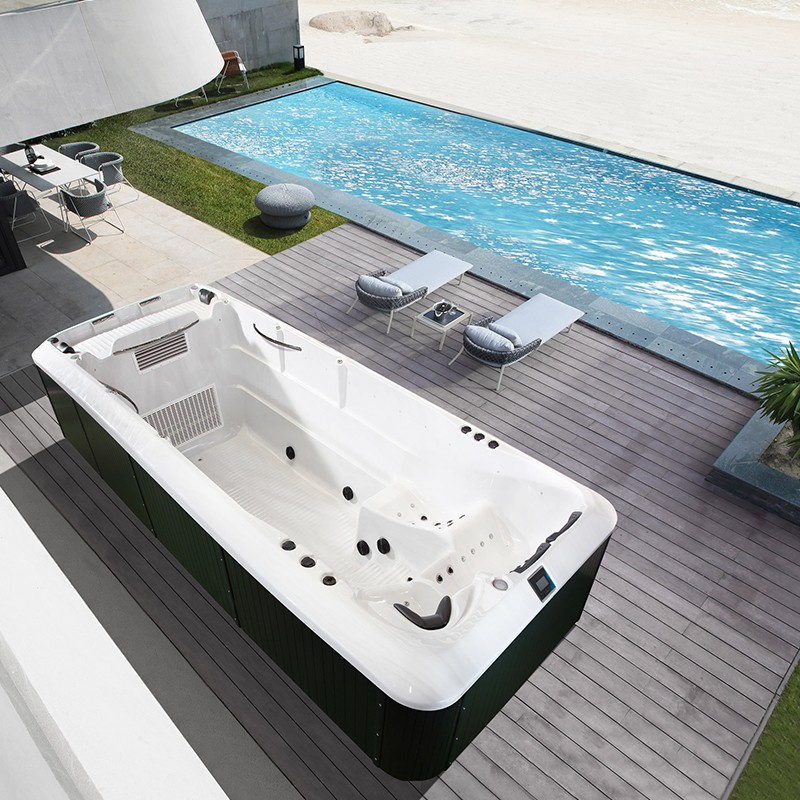
How to restore balance after excessive chlorine in a swim spa hot tub?
Once the chlorine concentration returns to a safe range, the overall chemical parameters of the water should be gradually adjusted.
1. Check free chlorine and total chlorine
Free chlorine (usable chlorine) should be maintained at 1.5–3 ppm.
If total chlorine is significantly higher than free chlorine, it indicates excessive chloramine accumulation, requiring appropriate water changes or a mild shock treatment.
2. Adjust alkalinity and calcium hardness
Alkalinity (TA) should be maintained at 80–120 ppm;
Calcium hardness (CH) should be maintained at 150–250 ppm.
This stabilizes the water's buffering capacity and prevents excessive chemical fluctuations.
3. Restore normal disinfection schedule
After the chlorine concentration drops to a safe level, re-establish a scientific dosing schedule to avoid overdosing again.
Why is chlorine easily excessive in swim spa hot tubs?
Understanding the reasons is key to preventing recurrence.
1. Overdosing
Users often add excessive amounts of disinfectant tablets or shock agents at once, causing a rapid spike in chlorine concentration.
2. Excessively High Water Temperature
The higher the temperature, the faster the chlorine is released. Swim spa hot tubs are typically maintained at 35–38℃, which accelerates chlorine release and makes concentration fluctuations more drastic.
3. Insufficient Circulation
If the filter is clogged or the circulation system doesn't run long enough, chlorine may accumulate in localized areas, forming high concentrations.
4. Blindly Adding Chemicals Without Testing
Lack of testing is the root cause of chlorine imbalance.
Regular testing is essential for maintaining healthy water quality in swim spa hot tubs.
How to Prevent Excessive Chlorine in Swim Spa Hot Tubes?
Besides emergency measures, establishing good maintenance habits is the long-term solution.
1. Establish a Fixed Testing Frequency
It is recommended to test chlorine content and pH value 2–3 times per week; daily testing is recommended for frequent use.
2. Add Disinfectant in Small Quantities
Instead of adding a large amount at once, it is better to add small doses multiple times to maintain a stable concentration.
3. Regularly Clean the Filtration System
Cleaning the filter ensures smooth water circulation and prevents excessively high chlorine concentrations in certain areas.
4. Use Chlorine Products with Stabilizers
Some chlorination products contain cyanuric acid (CYA) stabilizers, which slow down chlorine decomposition and result in a more even concentration.
5. Install an Automatic Dosing System (if the Equipment Supports It)
Some high-end swim spa hot tubs can be equipped with automatic dosing control systems that automatically adjust the dosage based on monitoring results, avoiding human error.
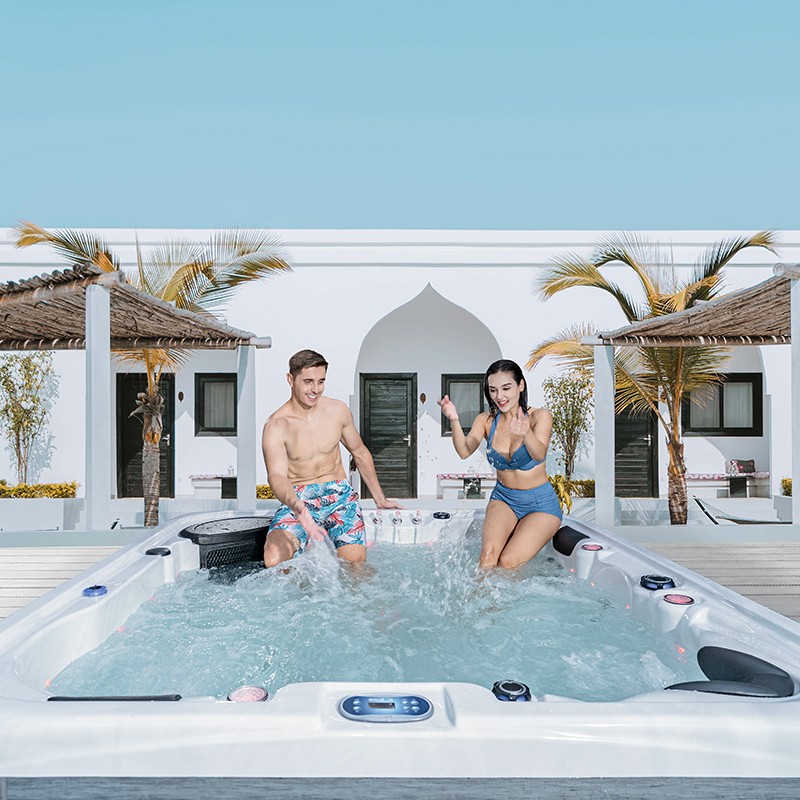
What is the difference between chlorine and chloramine in a swim spa hot tub?
Many users mistakenly believe that "the stronger the chlorine smell, the cleaner the water," but this is actually the opposite.
• Free chlorine is an effective bactericidal component;
• Chloramine is a byproduct of the reaction between chlorine and organic matter;
• Chloramine is the main source of the pungent odor and has very weak disinfection capabilities.
When chloramine accumulates excessively, even with high total chlorine levels, the water quality remains unhealthy.
The solution is partial water changes or a light flushing treatment to decompose the chloramine.
What to do if there's too much chlorine in your swim spa hot tub?
Summary:
• Immediately stop adding chlorine to prevent the concentration from rising further;
• Open the lid to ventilate and allow the chlorine to evaporate naturally;
• Partially change the water or use a neutralizing agent to dilute the high-chlorine water;
• Check and adjust the pH level, maintaining it between 7.2 and 7.6;
• Continuously circulate the water to accelerate concentration equilibrium;
• After recovery, establish a regular monitoring and chlorination schedule.
Chlorine's role is to maintain hygiene, but proper control is key to safety.
The optimal state for a swim spa hot tub is: clear water, a mild odor, and a stable chemical balance.